
Rising Food Costs in Canada: Why Your Restaurant's Margins Are Disappearing (And What to Do About It)
A comprehensive, data-driven analysis of why food costs are rising for Canadian restaurants in 2026 — inflation, carbon tax, US trade tariffs, fuel costs, and the weak Canadian dollar — plus 8 practical solutions operators can implement now.
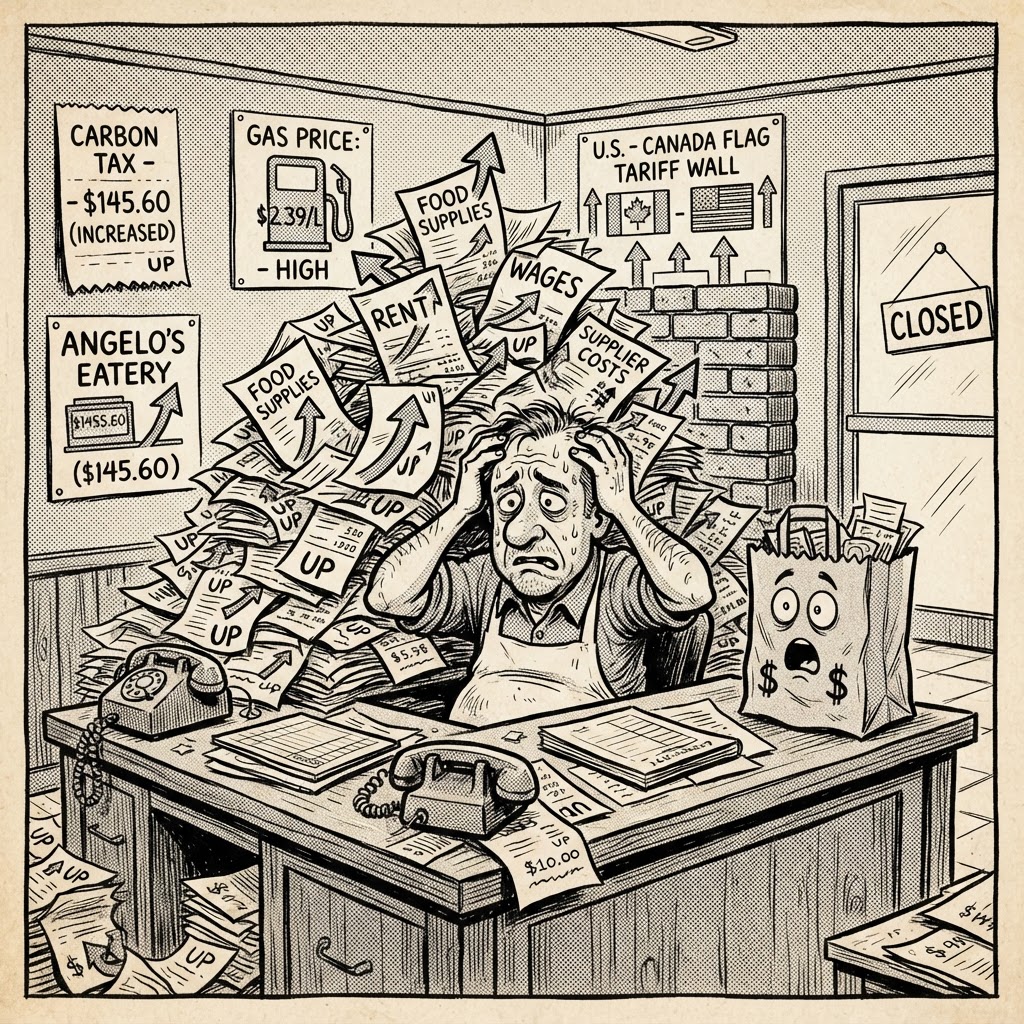
If you're a Canadian restaurant owner in 2026 and your food costs haven't made you question your life choices at least once this week, you're either very lucky or not paying attention.
Food prices in Canada have risen 40%+ since December 2019 (RBC Economics). The Canada Food Price Report 2026 (Dalhousie University and University of Guelph) forecasts another 4-6% increase this year. Canada now has the third-highest food inflation rate among all G7 countries — and it's the only G7 nation to post three consecutive monthly increases heading into 2026.
For independent restaurant operators, this isn't an abstract economic statistic. It's the difference between a profitable Saturday night and a loss. It's the agonizing decision to raise menu prices (and risk losing customers) or absorb the increase (and risk going under). It's the reason 4,000 Canadian restaurants are projected to close in 2026 — on top of the 7,000 that closed in 2025.
Let's break down exactly why this is happening, what's driving the increases, and — most importantly — what you can do about it.
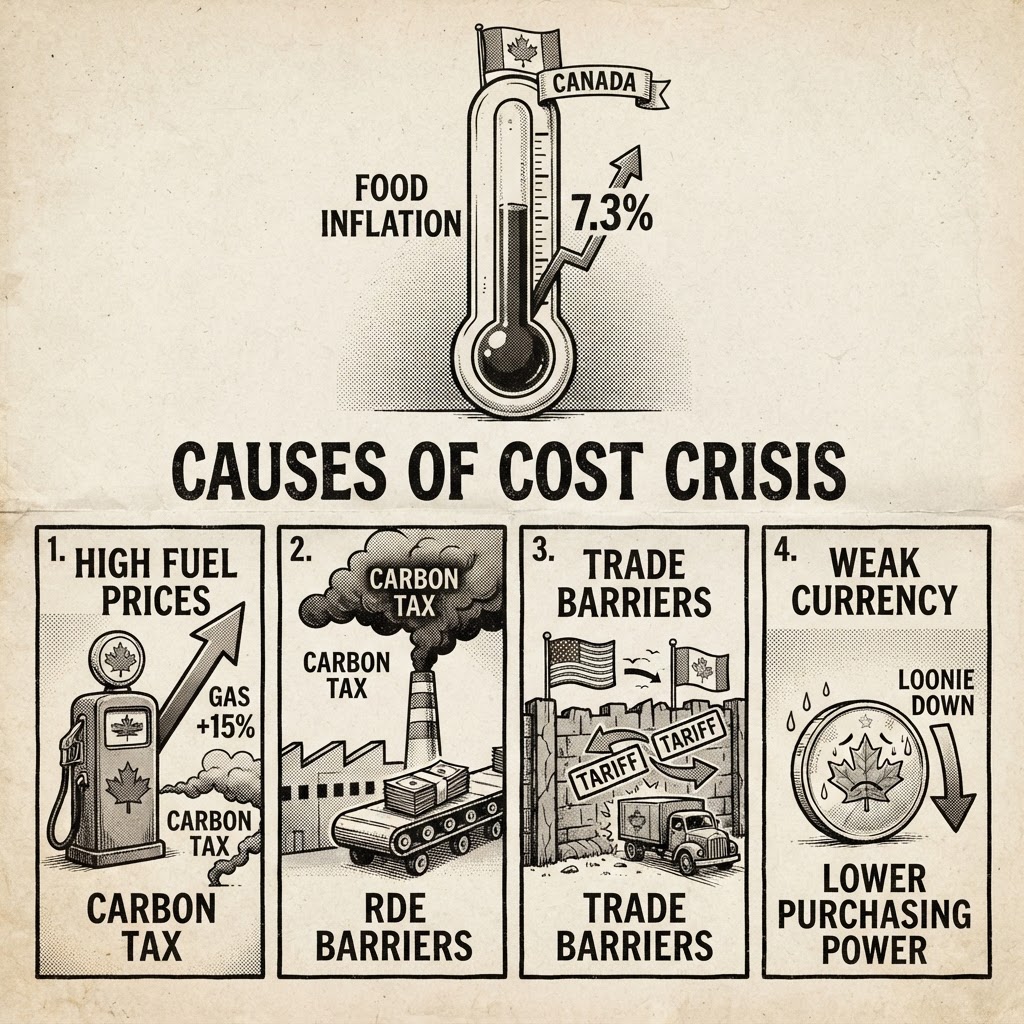
The Four Horsemen of Food Cost Increases
1. Inflation: The Slow Burn
Overall Canadian inflation cooled to 2.3% in January 2026 — but food inflation tells a different story. Food prices purchased from stores increased 4.8% year-over-year. Food purchased from restaurants increased a staggering 12.3% (Global News, January 2026).
Specific food price increases that are crushing restaurant margins:
| Food Category | Price Increase (YoY) | Impact on Restaurants |
|---|---|---|
| Frozen beef | +16.8% | Steakhouses, burger joints |
| Coffee | +30.8% | Cafés, breakfast spots |
| Meat (general) | +5-7% | All protein-heavy menus |
| Nuts | +5-7% | Bakeries, salads, desserts |
| Restaurant meals | +12.3% | Consumer pushback on dining out |
Sources: Statistics Canada, Global News, Retail Insider, RBC Economics (2026)
2. Carbon Tax: Gone But Not Really
Prime Minister Mark Carney repealed the consumer carbon tax on April 1, 2026. The Bank of Canada estimated this would reduce inflation by 0.7 percentage points. Great news, right?
Not so fast. The industrial carbon tax remains in effect — and that's the one that actually affects food prices. Industrial carbon pricing applies to large emitters, including fertilizer manufacturers, food processing facilities, and transportation companies. As a Kelowna Capital News column noted: "The carbon tax you still pay every time you buy groceries."
Experts have been blunt: scrapping the consumer carbon tax is "unlikely to have meaningful impact on food prices" because the industrial carbon levy continues to add costs at every stage of the food supply chain — from fertilizer production to food processing to refrigerated trucking.
3. US Trade Tariffs: The Trade War Escalates
This is where it gets serious. As of September 8, 2026, Canada imposed counter-tariffs of 15%, 25%, and 50% on approximately C$27.6 billion of US imports — matching US tariff rates on over 700 Canadian products.
The United States, under President Trump, slapped 50% tariffs on $20 billion in Canadian goods and banned some Canadian dairy products. The tariffs directly affect:
- Agricultural commodities — US-sourced produce, grains, and processed foods now cost significantly more
- Packaging materials — many food-grade packaging products are imported from the US
- Food processing equipment — replacement parts and new equipment costs are rising
- Beverages — US-sourced wine, spirits, and beer are subject to retaliatory tariffs
For restaurants that source any ingredients, packaging, or equipment from the US, the tariff impact is immediate and significant. A 25% tariff on a key ingredient doesn't just raise your food cost — it forces you to either find a new supplier, raise prices, or eat the margin loss.
4. Fuel and Transportation: Diesel at Record Highs
Diesel prices in Canada hit a record high of $2.751 per litre in 2026, rising $0.48 per litre since March alone. The national average sat between $1.65-$1.75/litre in early 2026 and surged higher through the summer.
Why this matters for food costs: transportation accounts for approximately 3.5% of the retail price of food overall — but that jumps to as high as 10% for fresh produce, which requires refrigerated transport. Every cent increase in diesel ripples through the entire food supply chain.
Add in a weak Canadian dollar (trading at approximately $1.42 CAD per $1 USD in September 2026, near the top of its 52-week range), and every imported ingredient becomes more expensive. Canada imports approximately $30+ billion in food and agricultural products annually — a significant portion of which originates in the US.
The Compound Effect on Restaurants
Here's the brutal math for a typical independent Canadian restaurant:
| Metric (2026) | Data | Source |
|---|---|---|
| Restaurants operating at loss/break-even | 36% | Restaurants Canada |
| Operators citing food cost pressure | 91% | Restaurants Canada Q1 2026 |
| Operators citing labour cost pressure | 87% | Restaurants Canada Q1 2026 |
| Report declining profitability | 71% | Restaurants Canada Q1 2026 |
| Customers dining out less (affordability) | 69% | Restaurants Canada Q1 2026 |
| Projected restaurant closures (2026) | 4,000 | Dalhousie University |
| Food price increase vs 2019 | +40% | RBC Economics |
The picture is stark: costs are rising across every input, consumers are pulling back on dining out, and operators are squeezed from both sides. Real commercial foodservice sales are expected to decline by 0.2% in 2026 (inflation-adjusted) — meaning even if your sales look the same on paper, your purchasing power has shrunk.
8 Solutions: How Restaurants Are Fighting Back
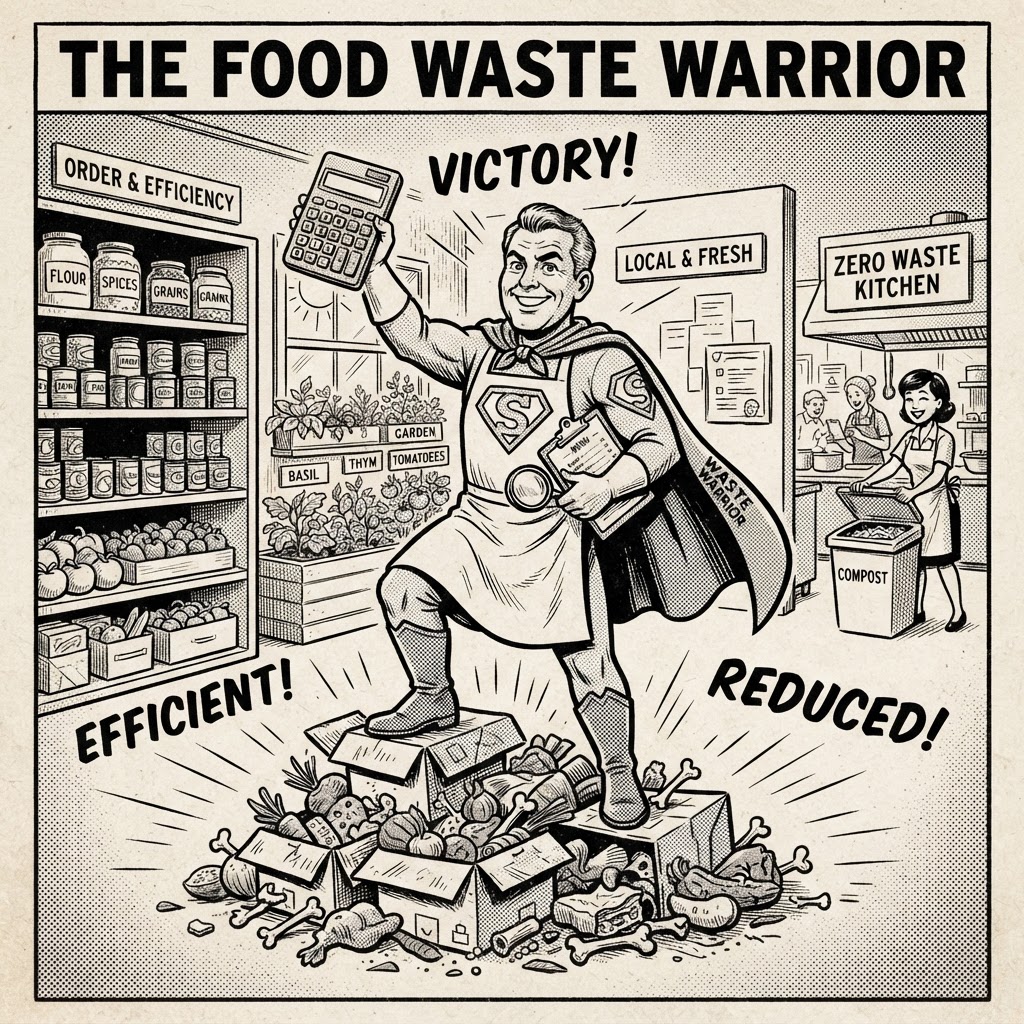
Based on TouchBistro's 2026 Canadian State of Restaurants Report and industry best practices, here's what successful operators are doing to mitigate rising food costs:
1. Engineer Your Menu (Dollars, Not Percentages)
Stop chasing food cost percentage and start focusing on dollar contribution margin. A $40 steak with 38% food cost puts $24.80 in your pocket. A $16 pasta with 25% food cost puts $12.00 in your pocket. The pasta has a better food cost % — but the steak generates twice the profit dollars. Classify every item as a Star, Plowhorse, Puzzle, or Dog. Remove the Dogs. Reposition the Puzzles. Protect the Stars. (Read our full menu engineering guide.)
2. Trim Your Menu by 20-30%
Fewer menu items = less inventory, less waste, faster prep, easier training, and better consistency. Remove items selling fewer than 5 times per week. Every item should earn its place on the menu through profitability AND popularity.
3. Reduce Portion Sizes Strategically
Canadian restaurant portions are notoriously large. A 10-15% portion reduction on high-food-cost items — done thoughtfully, with better plating — can save thousands per month without customer complaints. The key: reduce portions on Plowhorses (popular but low-margin items), not Stars.
4. Source Local and Seasonal
Local sourcing isn't just a marketing buzzword — it's a tariff hedge. When US produce carries a 25% tariff, local Canadian suppliers become cost-competitive. Seasonal menus also let you buy at peak supply (lowest prices) and avoid importing out-of-season ingredients at premium rates.
5. Track Food Cost Daily, Not Monthly
Monthly food cost reviews are autopsies. Daily tracking catches problems — a supplier price increase, a portion control issue, a wastage spike — before they compound. One Foodie Run user caught a 35% labour-to-sales ratio on a Tuesday and adjusted immediately, saving $2,800/month. The same principle applies to food costs.
6. Conduct a Waste Audit
Studies show restaurants can reduce food waste by 20-30% with proper inventory management (Bonappify, 2026). Track what goes in the garbage for one week. You'll likely find: over-ordering of perishables, inconsistent portions, prep waste from poor knife skills, and items spoiling before use. Fix the top 3 waste sources and watch your food cost drop.
7. Join a Group Purchasing Organization (GPO)
If you're an independent operator buying from a single distributor, you're paying retail prices. GPOs pool purchasing power across hundreds of restaurants to negotiate better rates on key commodities — proteins, dairy, dry goods, oils. Savings typically range from 5-15% on contracted items.
8. Renegotiate with Suppliers Quarterly
Canadian food distributors operate on margins too. If you've been a loyal customer for 12+ months, ask for volume discounts. Compare prices across 2-3 suppliers every quarter. In a market where food prices rise 4-6% annually, a 2% supplier discount is found money.
Menu Pricing Strategies for 2026
Full-service restaurant menu prices grew 3.5% year-over-year as of August 2025 (Restaurant.org). But with food costs rising faster than menu prices, many operators are being squeezed. Here's how to price smartly:
Small, frequent increases beat large, infrequent ones. A $1 increase across 10 menu items is less noticeable than a $5 increase on one item. Customers notice patterns, not pennies.
Use decoy pricing. Place a high-priced item at the top of a menu section to make everything below it look reasonable. A $48 ribeye makes the $26 chicken feel like a deal.
Drop dollar signs. Cornell University research shows menus without $ signs result in higher spending. List "24" instead of "$24".
Bundle strategically. Bundle a high-margin item (like a side salad with $2 food cost) with a lower-margin main. The bundle looks like value to the customer while improving your overall margin.
Reprice Plowhorses. Your most popular items that have low margins should see small, regular price increases. A $1.50 increase on a dish selling 300/month = $450/month in additional profit — with minimal customer resistance.
The Bottom Line
The Canadian restaurant industry is facing a perfect storm: food inflation at 4-6%, industrial carbon tax still embedded in supply chains, US trade tariffs disrupting ingredient sourcing, diesel at record highs, and a weak Canadian dollar making imports more expensive. 91% of operators report food cost pressure. 4,000 restaurants will close this year.
But the operators who survive — and thrive — will be the ones who don't just accept rising costs as inevitable. They'll engineer their menus, trim their offerings, source locally, track costs daily, and adjust pricing strategically. They'll know their numbers to the decimal point, not guess at them.
The question isn't whether food costs will continue to rise. They will. The question is whether you'll see the increases coming — or only discover them at month-end when it's already too late.
Foodie Run helps Canadian restaurants track food costs, calculate COGS, monitor prime costs, and generate instant P&L reports — all from your phone. Built in Canada. $19.99/month.
🎁 Start a free 14-day trial — no credit card required. Use code MANAGE25 for 25% off.
Sources: Canada's Food Price Report 2026 (Dalhousie University / University of Guelph), Statistics Canada Food Price Data Hub, RBC Economics, Restaurants Canada Q1 2026 Quarterly Report, Retail Insider, Global News, Trading Economics, TouchBistro 2026 Canadian State of Restaurants Report, Cornell University School of Hotel Administration, Legal500 (Canada counter-tariffs), TruckerPro (diesel price forecast), FRED/St. Louis Fed (exchange rates), Bonappify Food Waste Reduction Guide 2026, Food Dive, Reuters.
Take control of your restaurant's numbers
Foodie Run brings prime cost, labour, forecasting, and reporting into one Canadian-built platform.
Start your 14-day free trial

