The Future of Italian Restaurants in Canada: Nonna Would Be Proud (But Concerned About Food Costs)
From the durum wheat crisis to the plant-based pasta revolution, discover what the future holds for Italian restaurants in Canada. Witty, well-researched, and surprisingly optimistic.
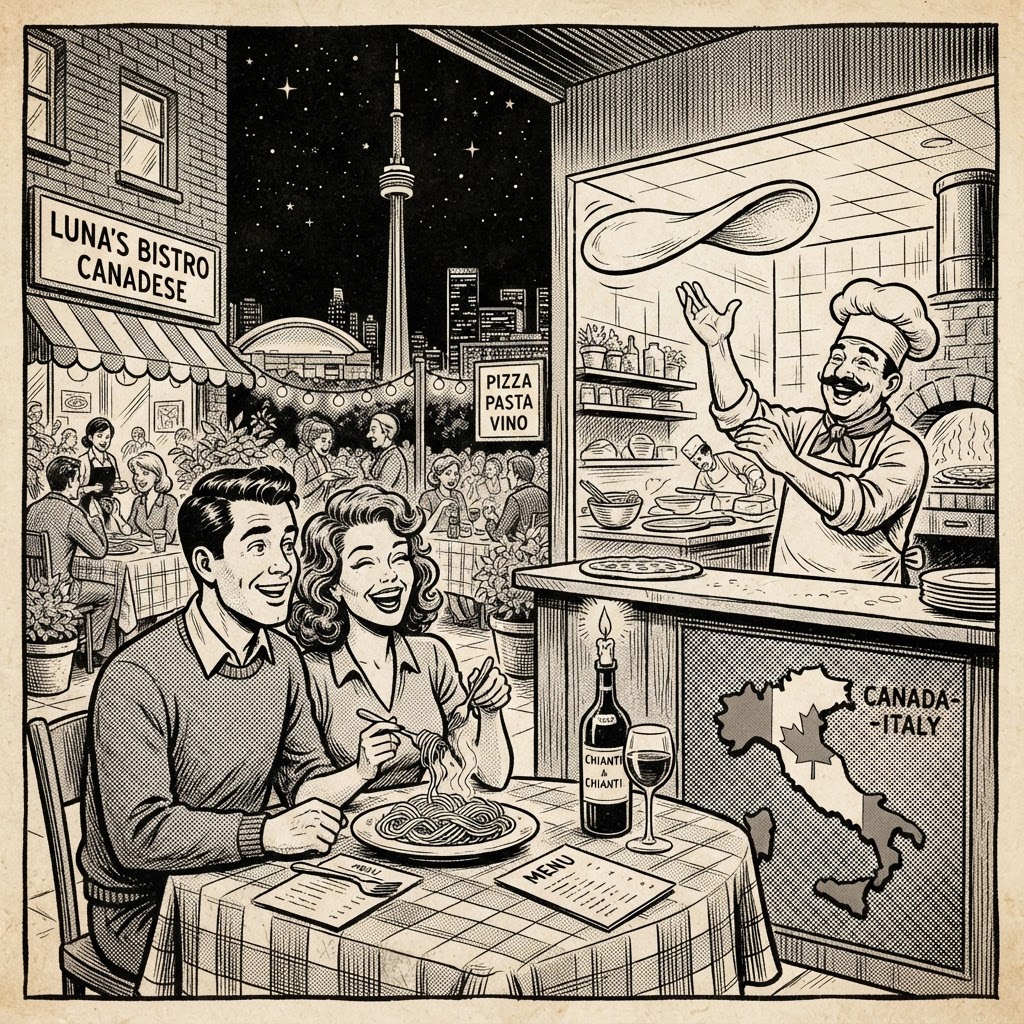
Let's be honest: Canadians love Italian food more than Italians do. We put maple syrup on our cannoli. We argue about whether pineapple belongs on pizza (it doesn't, but we still order it). And we've turned "spaghetti night" into a weekly religion.
With 1.5 million Canadians claiming Italian heritage (2021 Census) — one of the world's largest Italian diasporas — and the global Italian food market projected to hit $47 billion by 2034, Italian cuisine isn't just surviving in Canada. It's evolving. But the road ahead has more twists than a plate of fusilli.
Let's dig into what the future holds for Italian restaurants in Canada — the challenges, the opportunities, and why the next decade might be the most interesting one yet.
The State of Italian Restaurants in Canada (2026)
Italian restaurants are having a moment in Canada — but it's a complicated moment. On one hand, Italian cuisine remains one of the top three most popular ethnic cuisines in Canada, with demand for authentic dining experiences growing. On the other hand, 36% of Canadian restaurants are operating at a loss or barely breaking even, and 4,000 more are projected to close in 2026 (Dalhousie University).
Yet Italian restaurants keep dominating "best of" lists. Canada's 100 Best Restaurants 2026 includes DOPO (Calgary), DaNico (Toronto), Mon Lapin (Montreal, ranked #2 in the country), and Radici Project (Toronto). Air Canada's Best New Restaurants 2026 features N.L. Ginzburg in Toronto, which combines Italian cooking with Jewish diasporic food traditions — the kind of creative fusion that's redefining what "Italian" means in Canada.
The message is clear: generic Italian is dying. Authentic, innovative Italian is thriving.
The Durum Wheat Crisis (Or: Why Your Pasta Costs More)
Here's something that should keep every Italian restaurant owner in Canada up at night: Canada is one of the world's largest producers of durum wheat — the key ingredient in pasta — and we're struggling to grow enough of it.
Droughts across the Canadian Prairies have damaged durum wheat crops, creating a global shortage. Pasta prices have soared nearly 20% in recent months, even as the price of wheat itself has been declining in some markets. A 90% price spike in durum was recorded during the worst of the shortage (Food Dive, 2023-2024).
For Italian restaurant operators, this means:
- Dried pasta costs are up 15-25% year-over-year
- 00 flour (used for fresh pasta and pizza dough) has seen similar increases
- Importing Italian-made pasta is getting more expensive due to shipping costs and potential tariffs
- The days of pasta being a "cheap menu item" are ending
Smart operators are already adapting: some are sourcing from alternative Canadian mills, some are blending durum with other wheat varieties, and some are re-engineering their menus to feature pasta as a premium dish rather than a budget option.
The Authenticity Revolution
Remember when "Italian restaurant" meant red-checkered tablecloths, candle-in-a-Chianti-bottle, and a menu that started with bruschetta and ended with tiramisu? That era is ending.
Modern Canadian diners are more informed and selective than ever. They've travelled to Italy (or watched enough Netflix food docs to feel like they have). They know the difference between Roman carbonara (guanciale, no cream, ever) and the Canadian version (cream, bacon, please don't tell the Italians). They want regional specificity — Sicilian arancini, Venetian cicchetti, Neapolitan pizza, Roman cacio e pepe.
A LinkedIn analysis of 2026 restaurant trends noted that "modern diners no longer want generic Italian-style food — they want authentic, regionally-specific Italian cuisine." The restaurants winning are the ones that can tell a story about where their recipes come from.
This creates both a challenge and an opportunity for independent operators:
- Challenge: You can't fake authenticity. Diners will know if your "Roman-style" pizza doesn't actually follow Roman techniques.
- Opportunity: If you invest in real regional recipes, source quality DOP/IGP-certified ingredients, and tell your story well, you can charge premium prices and build fierce loyalty.
Plant-Based Pasta: Not Your Nonna's Spaghetti
The global gluten-free pasta market was valued at $8.32 billion in 2026 and is projected to reach $13.64 billion by 2034 (Fortune Business Insights). But it's not just celiac disease driving this — it's the plant-based movement.
Italian restaurants in Canada are increasingly offering:
- Chickpea and lentil pasta — higher protein, gluten-free, and actually delicious when prepared well
- Plant-based ragù — mushroom, lentil, and Beyond Meat versions of Bolognese that don't taste like cardboard anymore
- Vegan parmigiana — cashew-based "ricotta" and nutritional yeast "parmigiana" that have fooled actual Italians
- Gluten-free pizza dough — cauliflower-based, almond flour, or specialized gluten-free blends that actually crisp up properly in a wood-fired oven
The restaurants that figure out how to make plant-based Italian food taste genuinely Italian — not like a sad compromise — will capture a growing segment of the market. An estimated 30-40% of Canadians are now actively reducing meat consumption (flexitarian). That's a lot of people who still want pasta but don't want the meat sauce.
The Wine Situation: An Italian Renaissance
Here's some good news for Italian restaurant operators: Canada is the fastest-growing market for Italian wine (ITA Canada, 2025-2026). Italian wine imports to Canada grew approximately 5% in volume, and Italy holds a 24% share of Canadian wine imports — the largest of any country.
Better yet, the LCBO monopoly in Ontario is being dismantled, opening new channels for Italian wine distribution. This means Italian restaurants can increasingly source directly from Italian producers, offer more diverse regional wines, and potentially reduce their wine costs.
For operators, the opportunity is to elevate the wine program. Canadian diners are becoming more wine-curious. They want to know that their Barolo pairs with the braised short rib, and that the Vermentino complements the seafood linguine. A well-curated Italian wine list isn't just a revenue driver — it's a competitive differentiator.
What's Killing the Old-School Italian Restaurant?
Let's be direct about what's not working anymore:
1. Giant menus with 60+ items. If your menu reads like a novel, you're carrying too much inventory, creating too much waste, and training staff on dishes that sell twice a week. Trim to 20-25 well-executed items. (See our menu engineering guide for the full framework.)
2. Frozen pasta and canned sauces. Canadian diners can tell. With the rise of authentic regional Italian spots, the bar has been raised. If you're not making at least some pasta in-house, you're competing on price — and price is a race to the bottom.
3. No story. "Family recipes since 1985" isn't a story anymore. Every restaurant has that. What region? What village? What makes your carbonara different from the place down the street? If you can't answer that in one sentence, your marketing isn't working.
4. Ignoring food costs. With durum wheat prices up 20% and overall food costs up 34% since 2019, Italian restaurants that don't track their food cost percentage weekly are bleeding money on every plate of pasta. Pasta was always a high-margin item — but it's becoming less so, and operators who don't adjust will find their margins disappearing.
What the Future Looks Like (2027-2030)
Based on current trends, here's what the Italian restaurant landscape in Canada will look like in the next 3-5 years:
The survivors will be either ultra-authentic or unapologetically creative. The middle ground — generic Italian with no regional specificity and no creative angle — is disappearing. You either commit to "we make exactly what they make in a village in Puglia" or you commit to "we're reimagining Italian cuisine through a Canadian lens." Both work. Neither is easy.
Pasta will become a premium product. As durum wheat costs rise, expect to see more restaurants making fresh pasta in-house (where they control the flour blend and cost), and fewer relying on dried pasta as a cheap filler. Fresh pasta will be positioned as artisanal, priced accordingly, and served in smaller, more intentional portions.
Regional Italian concepts will multiply. Instead of "Italian restaurant," expect to see "Roman-style pizza," "Sicilian street food," "Venetian cicchetti bar," and "Northern Italian farmhouse." Specialization sells. Generalization doesn't.
Plant-based Italian will go mainstream. Every Italian restaurant will have at least 2-3 genuinely good plant-based options — not as an afterthought, but as a core menu strategy. The flexitarian market is too large to ignore.
Technology will matter. The independent Italian restaurant that tracks its prime cost daily, engineers its menu quarterly, and knows its food cost percentage to the decimal will outlast the one that reviews numbers monthly. In 2026's economy, data isn't optional — it's survival.
The Bottom Line
Italian food isn't going anywhere in Canada. It's too deeply woven into our culture, our communities, and our palates. But the way we serve it, price it, and talk about it is changing rapidly.
The Italian restaurants that will thrive in the next decade are the ones that combine authentic recipes with modern business sense. Beautiful pasta, yes. But also: tight food cost tracking, engineered menus, plant-based options, a compelling wine program, and a story that diners can connect with.
Nonna would approve — as long as you don't put cream in the carbonara.
Running an Italian restaurant in Canada? Foodie Run helps you track food costs, monitor prime costs, engineer your menu, and generate professional P&L reports — all from your phone.
🎁 Start a free 14-day trial — no credit card required. Use code BLUEPRINT25 for 25% off.
Sources: Statistics Canada (2021 Census), Dalhousie University Agri-Food Analytics Lab, Fortune Business Insights (Gluten-Free Pasta Market 2026), Canadian Restaurant and Foodservice Association, Restaurants Canada, Food Dive, Reuters, Italian Trade Agency (ITA) Canada, Canada's 100 Best Restaurants 2026, Air Canada's Best New Restaurants 2026, LinkedIn 2026 restaurant trends analysis, IBISWorld, VantaInsights.
Take control of your restaurant's numbers
Foodie Run brings prime cost, labour, forecasting, and reporting into one Canadian-built platform.
Start your 14-day free trial